← Selected work
02 / Product design · Travel

PocketChina

A cultural-travel platform exploring how travellers discover meaningful experiences and plan feasible multi-city trips. Research informed an itinerary system, a public web prototype and a mobile concept.

Tools
FigmaHTMLCSSJavaScript
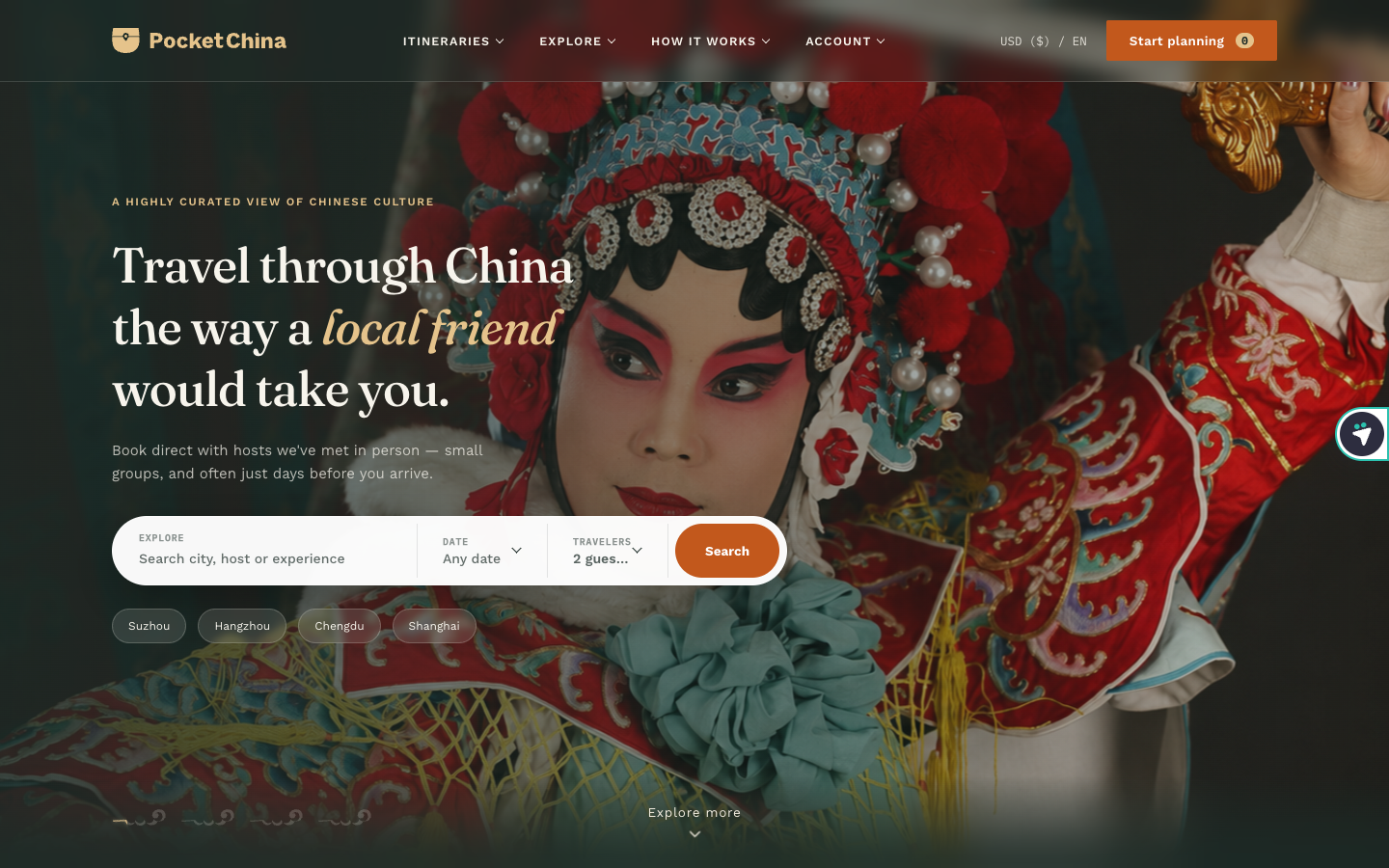
PocketChina project overview visual
PocketChina / Selected work
Year2026
My roleResearch, strategy, UX/UI, front-end
FormatPublic web prototype + 26-screen mobile concept

The web prototype is live; experience listings and booking data are illustrative.

Finding an experience is easy. Knowing if it fits the trip is harder.

The product positions itself between an open marketplace and a fixed tour. It lets travellers choose, while providing context for the geographic and time-based consequences of those choices.

6semi-structured interviews
38survey respondents
4reference service models

Research pointed to trip planning, local information and trust as the design problems. The survey sample was exploratory and skewed toward independent travellers, so its findings guided design rather than establishing a market-wide preference.

Research finding

People wanted guidance without surrendering control.

Design response

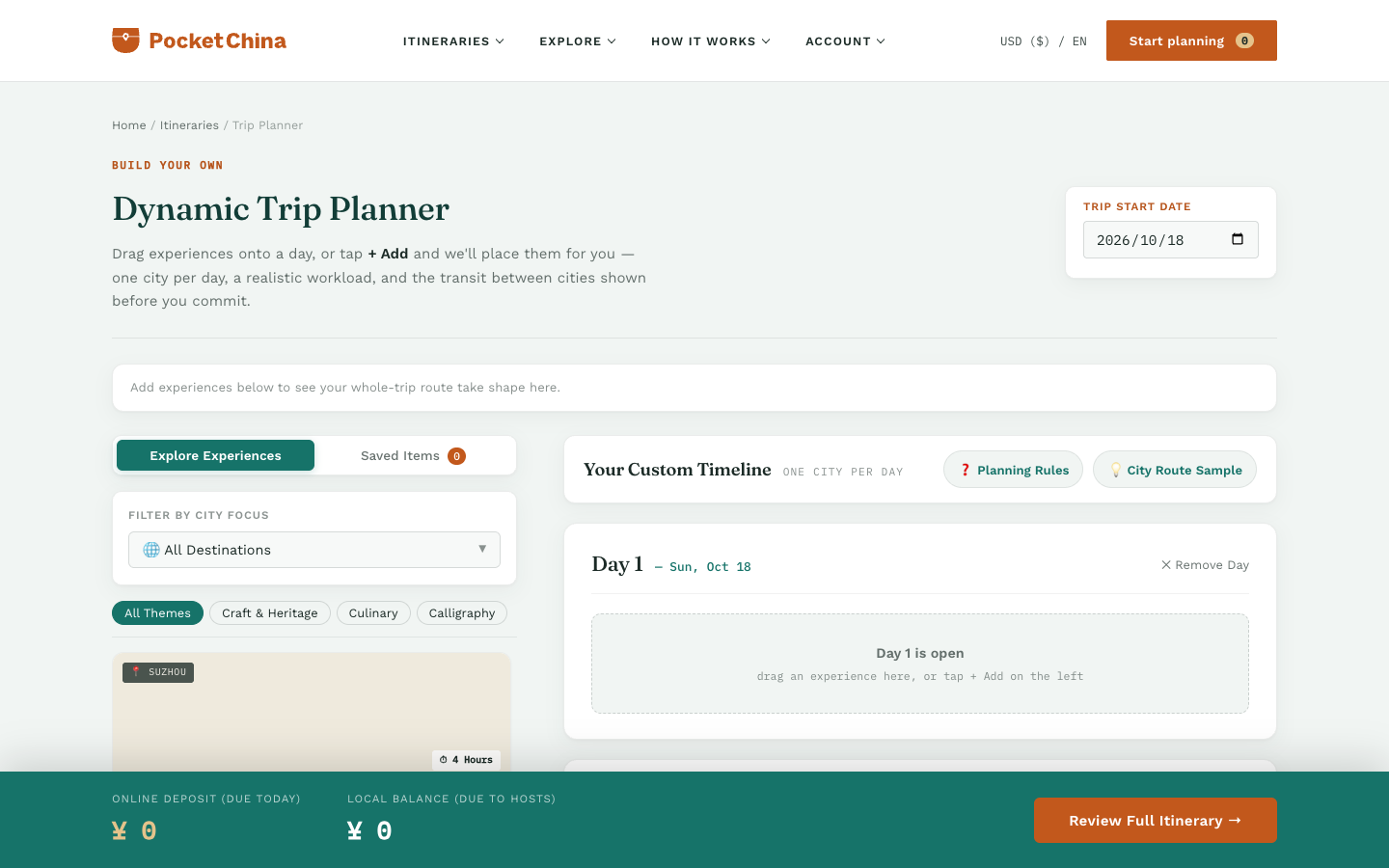
The Trip Plan System shows intercity travel time and options within the itinerary, while leaving the decision with the traveller.

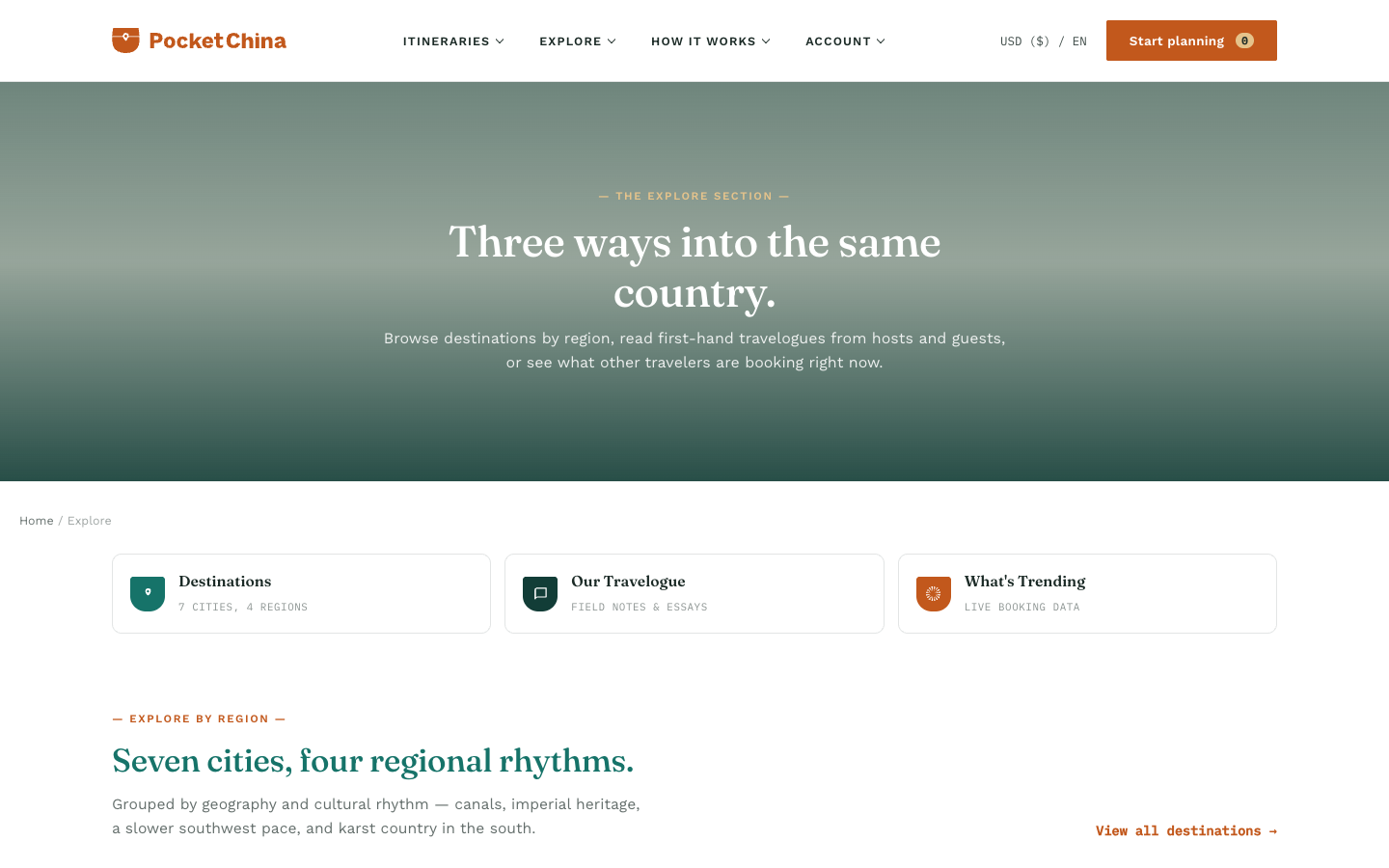
PocketChina Explore page
Browse by destination and cultural interest.
PocketChina Trip Plan System
Make route implications visible before committing.
01 / Discover

Multiple entry points

Places, themes and experience details support different starting questions.

02 / Decide

Density follows the task

Brand expression leads on discovery pages; practical and trust information takes priority near booking.

03 / Plan

Autonomy needs context

A freer itinerary was less useful without the travel constraints that make choices realistic.

Mobile concept

The journey continues after planning.

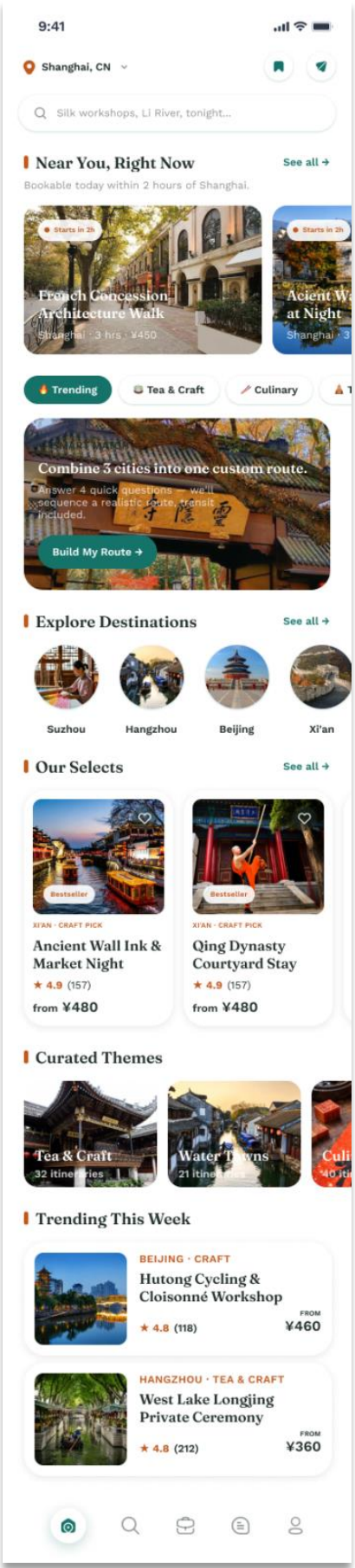
The 26-screen mobile concept covers nearby discovery, route building, booking, tickets and support. This image is from the project documentation; the displayed prices and ratings are prototype content.

PocketChina mobile homepage concept

Useful signals, with clear limits.

In the final prototype evaluation, five people attempted eight web and ten mobile tasks each. The project record reports 85 completed, three partial and two failed attempts across 90 participant-task attempts. Two people struggled with the route from Trip Plan to booking; some wanted more detail in itinerary cards.

There was no live booking business behind the prototype. Accessibility, translation and transactional infrastructure need further work before any real-world claim about adoption or trust.

Source: PocketChina MSc practice-based thesis, August 2026, final usability task record and the public prototype.